


Certified Organic Skin Care Products To Try from Australian Brands

Last updated 13 July 2026 · 9 min read
Certified organic skin care products from Australian brands are easier to shop once you know one thing: the word “organic” on a bottle and the word “certified” in front of it are doing completely different jobs.
One is a description a brand has chosen for itself. The other means an independent body has assessed the product against a published standard and signed off on it. Both may appear on a beautiful Australian-made product. Only one of them has been checked by somebody other than the person selling it to you.
This guide explains what certified organic means in Australia, how to verify a claim in about sixty seconds, and which Australian brands are worth your attention.
KEY TAKEAWAYS
- “Organic” is a description. “Certified organic” means an independent body has assessed the product against a published standard.
- In Australia, cosmetic organic claims must not be misleading but certification is not compulsory for a domestic organic claim. That gap is where the confusion lives.
- A brand name containing the word “organic” tells you nothing about certification. Neither does a green label or a leaf.
- Certification can apply to the whole product, some ingredients, or the company. Check which.
- Certified organic is not the same as better for your skin. It is better evidence, which is a different and more useful thing.
QUICK ANSWER
Certified organic skin care means the product has been assessed against a recognised organic standard by an independent certifying body, and carries that body’s logo. In Australia, brands can describe products as organic without certification as long as the claim is not misleading. So certification is the most reliable way to know an organic claim has actually been checked. Look for the certifier’s name and logo, then confirm what the certification covers.
In this article
- What does certified organic actually mean?
- Is “organic” regulated in Australian skincare?
- Certified organic vs organic vs natural
- Which certifications will I actually see?
- How do I verify an organic claim in 60 seconds?
- Certified organic at VAMS: the LAMAV range
- Other Australian brands worth discovering
- Is certified organic worth the extra money?
- Frequently asked questions
- Related reading
- Research and references
What Does Certified Organic Actually Mean?
Certified organic means an independent certifying body has assessed a product against a published organic standard and permitted it to carry their logo. The standard sets out which ingredients are allowed, how they must be grown and processed, what percentage of the formula must be organic, and what records the brand has to keep.
The important word is independent. Certification is not a brand telling you it is organic. It is a third party checking, and being willing to put their name on the answer.
THE ONE SENTENCE VERSION
“Organic” is what a brand says about itself. “Certified organic” is what somebody else has confirmed.
Is “Organic” Regulated in Australian Skincare?
Partly — and the gap is where most of the confusion sits.
Under Australian Consumer Law, any organic claim a business makes must not be false, misleading or deceptive, and the business must be able to substantiate it. The ACCC is clear on that. But there is no compulsory certification requirement for a product to be described as organic domestically. A brand can use the word, provided it can back it up.
In practice, that means two products sitting side by side on the same shelf can both say “organic” while meaning very different things. One might be certified to a published standard at a specified percentage. The other might contain a small quantity of an organically grown botanical in an otherwise conventional formula and still be describing itself accurately.
Neither is dishonest. But only one of them is telling you something a stranger has checked.
Certified Organic vs Organic vs Natural
Three words that get used as though they mean the same thing. They do not.
| Term | What it tells you | Who checked it |
|---|---|---|
| Certified organic | The product meets a published organic standard, at a specified percentage, and carries the certifier’s logo. | An independent certifying body. |
| Made with organic ingredients | Some ingredients are organically grown. It does not tell you how many, or how much of the formula they make up. | The brand. Substantiation is required, but not certification. |
| Organic | A description the brand has chosen. It may be entirely accurate. It has not necessarily been verified. | The brand. |
| Natural | Ingredients are derived from nature. It says nothing at all about how they were farmed. | Nobody. There is no natural standard. |
| A brand name containing “Organic” | Nothing whatsoever. A brand name is a name. | Nobody. This one catches everyone. |
Which Certifications Will I Actually See?
A handful of certifiers appear on Australian shelves. Each assesses different things, and none of them covers every concern you might have.
- Australian Certified Organic (ACO): A widely seen Australian certifier. Assesses cosmetics against organic standards and issues a certification logo.
- Organic Food Chain (OFC): Another Australian organic certifier, operating to its own standard. This is the one behind the LAMAV range we stock.
- COSMOS: An international standard developed specifically for cosmetics, with separate COSMOS ORGANIC and COSMOS NATURAL tiers. The distinction between those two tiers matters.
- NASAA Organic: Another Australian certifier operating to its own published standard.
- USDA National Organic Program: An American standard. You will see it on products made for or sold into the US market.
- Safe Cosmetics Australia: Not an organic certifier — it certifies vegan and cruelty-free status. Worth knowing, because these are often displayed side by side and they are answering different questions.
A word of caution, and it applies to every brand including the ones we sell: the certifiers have similar-sounding names, and they are not interchangeable. Australian Certified Organic and Organic Food Chain are different organisations with different standards. If a brand says “certified organic” without naming which body, that is worth a second look — not because they are hiding something, but because the name is the whole point.
Certification is expensive, and the cost falls hardest on small independent brands — which is precisely the kind of brand VAMS exists to champion. So the absence of a certificate is not evidence of bad faith. It often just means a small business has spent its money on the formula instead. What matters is whether the brand is straight with you about which it is.
How Do I Verify an Organic Claim in 60 Seconds?
Four questions. If a brand cannot answer them on its own product page, that is your answer.
- Who certified it? A named body, with a logo. “Certified organic” with no certifier named is a claim about nothing.
- What is certified — the product, the ingredients, or the company? These are very different. A company can hold a certification while an individual product does not.
- What percentage? Standards specify a minimum organic content. A product certified at 95% and one certified at 20% both carry a logo.
- Is the full ingredient list published? If a brand is proud of its formula, it shows you the formula.
THE GREEN LEAF TEST
A leaf motif, a kraft-paper box and a sage-green label are design decisions, not certifications. If the only evidence of a product’s organic credentials is how the packaging makes you feel, you have been shown a mood, not a standard.
Certified Organic at VAMS: The LAMAV Range
Of the Australian brands we stock, LAMAV is the one carrying a certification we can point you to — so let us apply our own four questions to it, rather than simply asserting it.
| The question | The answer |
|---|---|
| Who certified it? | Organic Food Chain, an Australian organic certifier. |
| What is certified? | Individual products — specifically, the ones carrying the certifier’s symbol. Not automatically the whole range. Look for the symbol. |
| What percentage? | More than 70% certified organic ingredients on products where the symbol appears. |
| Anything else? | LAMAV also holds Vegan and Cruelty-Free certification through Safe Cosmetics Australia, and is Australian-made. |
That is what a verifiable claim looks like: a named certifier, a stated percentage, and clarity about what the symbol does and does not cover. Note the last part particularly — the certification sits on individual products, not on the brand as a whole. If a certified formula is what you want, look for the symbol on the product itself rather than assuming the logo on the website covers everything in the range. That is true of every certified brand, not just this one.
70% IS NOT 100% — AND THAT IS FINE
A formula that is more than 70% certified organic still has a remaining 30%, and that 30% is doing a job: preserving the product, stabilising it, making it feel like something you want to put on your face. Organic standards permit this on purpose. A product is not less honest for containing it and no cosmetic is free of chemistry, whatever a label says.
Bakuchiol is the ingredient LAMAV is best known for a plant-derived compound often chosen by people who find retinol too much for their skin. As with any ingredient, the evidence belongs to the ingredient itself, not to any finished product it happens to appear in.
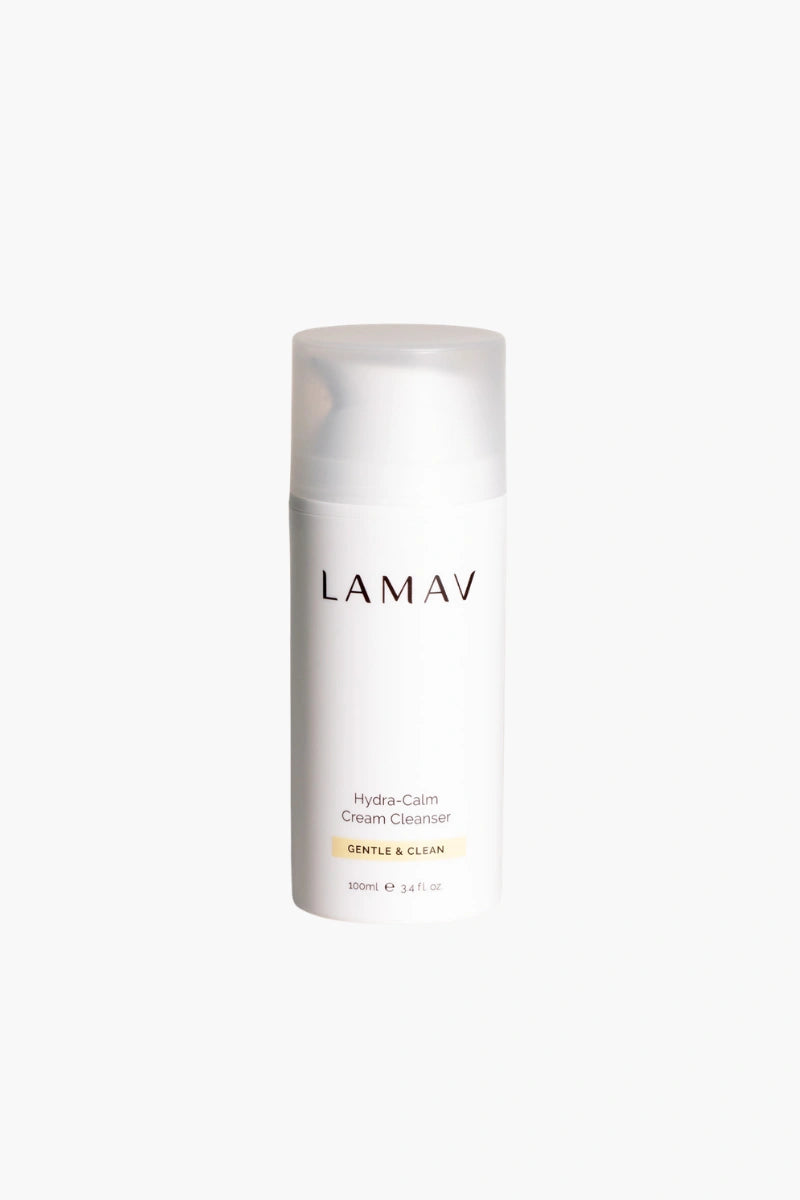
EDITOR’S CHOICE · BEST PLACE TO START
LAMAV Hydra-Calm Cream Cleanser 100ml
A non-foaming cream cleanser, and the gentlest entry point to the range. Who it suits: anyone whose skin feels tight or squeaky after washing. Why it helps: it lifts the day off without stripping, so skin feels calm and comfortable rather than scrubbed. How to use it: massage into damp skin, then rinse or remove with a warm cloth. Morning and night.
Shop now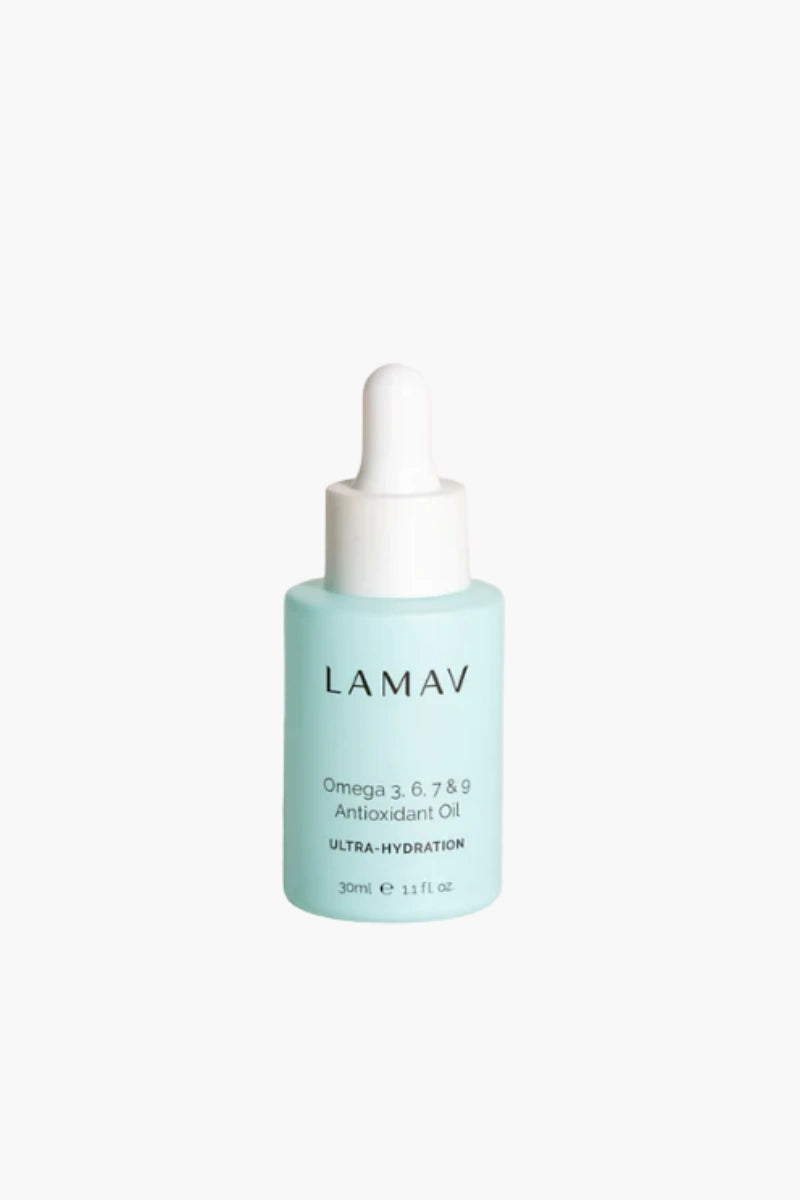
EDITOR’S CHOICE · BEST FACIAL OIL
LAMAV Omega 3, 6, 7 & 9 Antioxidant Oil 30ml
A blend of plant oils, and a good worked example of reading a label rather than a front-of-pack promise. Who it suits: skin that feels dry, tight or dull by the end of the day. Why it helps: skin feels nourished and comforted, and looks softer and more radiant. How to use it: two or three drops pressed into damp skin at night, after serum and before moisturiser.
Shop nowSHOP THE LAMAV EDIT
Four places to start with organic skincare

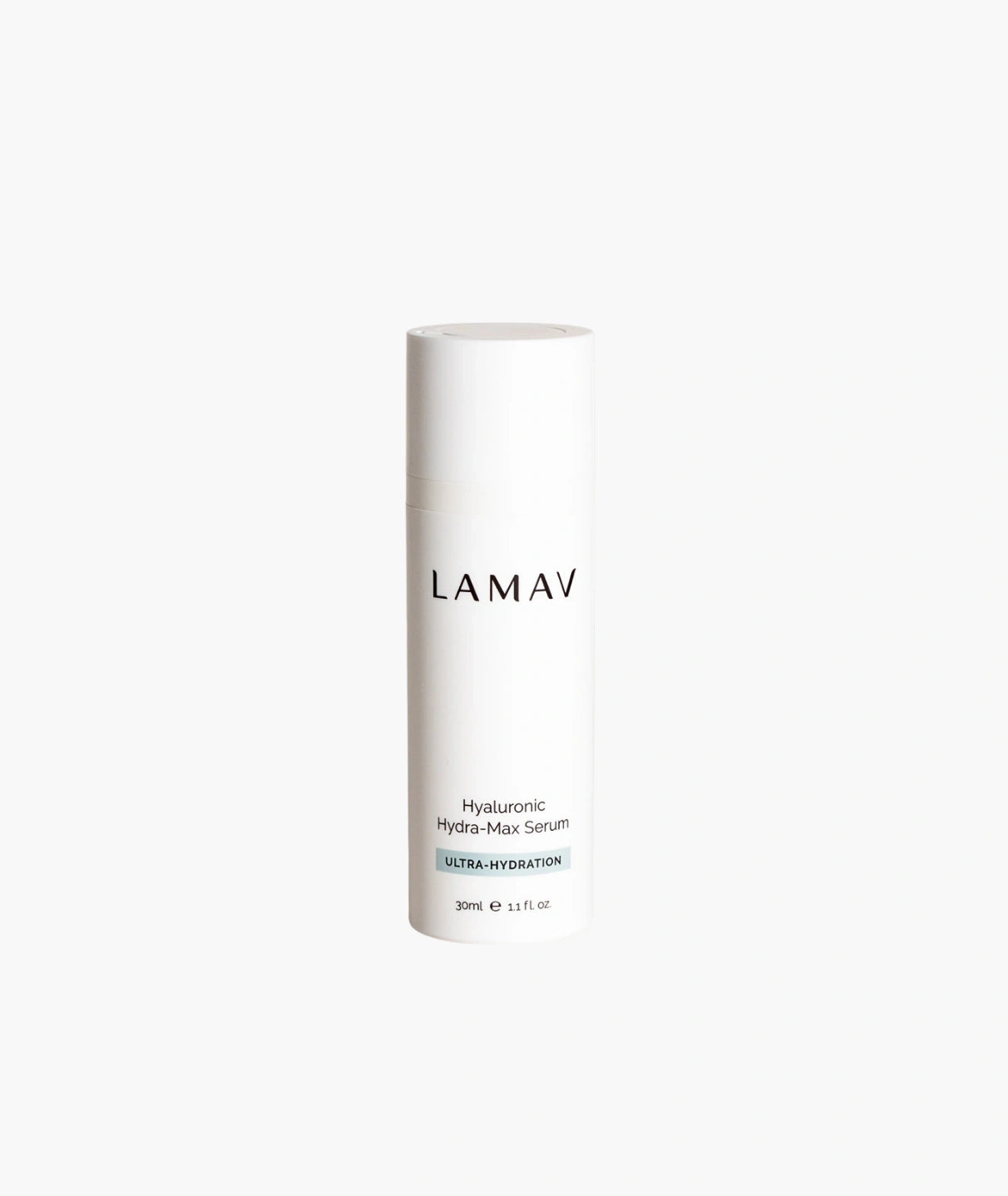


Browse the full range in the LAMAV collection, or read our guide to the LAMAV range.
Other Australian Brands Worth Discovering
Here is where we are going to be careful, because this article is about not overstating things.
The Australian brands below are all worth your attention. They are Australian-made, independently run, and thoughtful about what goes into their formulas. We are not describing any of them as certified organic, because we have not verified that they hold certification — and assuming it, in a guide about verifying claims, would make us exactly the thing we are warning you about.
If certification specifically is what you are after, LAMAV is the range to look at. If what you actually want is an Australian brand that is open about its formulas, keep reading.
- Saya — Australian-made, and the brand people come back for. Body care, cleansers and mists that do the ordinary things beautifully.
- biobod — fragrance-free, simply formulated, and a favourite with people whose skin feels reactive. The Barrier Restore Nutrient Oil and the Calming Balance Cleanse Bar are the ones to know.
- Coco Sense Organic — small-batch and coconut-led. Read the ingredient list; they publish it.
- Remi Organics — marine-led formulas with an Australian coastal sensibility.
- Avocado Zinc — sun care, and a genuinely Australian preoccupation. SPF products are regulated separately by the TGA, so always read the SPF exactly as it is stated on the product.
You can meet every label we stock on our brands page, or browse the full Australian skincare range.
Is Certified Organic Worth the Extra Money?
It depends entirely on what you are buying it for.
Certification does not make a product work better on your skin. It is not a performance guarantee and it never claimed to be. A certified organic cream can leave your skin feeling wonderful, or it can sit on top of your face doing nothing much at all — exactly like any other cream.
What certification buys you is evidence. It tells you that somebody independent has looked at the farming, the ingredients and the percentages, and has been willing to put their logo on the result. If you care about how ingredients are grown, that is worth paying for. If what you care about is how your skin looks and feels, then the formula, the texture and whether it suits you matter considerably more than the certificate.
Both are legitimate reasons to buy something. They are just different reasons, and it is worth knowing which one is yours.
Myth: A brand with “Organic” in its name sells certified organic products.
Fact: A brand name is a name. It carries no certification and no standard.
Myth: Certified organic means the whole product is organic.
Fact: Standards specify a minimum percentage. Check what it is, and check whether the certificate covers the product, the ingredients or the company.
Myth: An uncertified brand is hiding something.
Fact: Certification is expensive and hits small independent brands hardest. What matters is whether a brand is honest about which it is.
Myth: Certified organic skincare will suit sensitive skin better.
Fact: Certification says nothing about how your skin will respond. Botanical ingredients and essential oils are among the more common irritants, and they are permitted under organic standards.
Frequently Asked Questions
What does certified organic mean in skincare?
Certified organic means an independent certifying body has assessed the product against a published organic standard and permitted it to carry their logo. It covers how ingredients are grown and processed, and what percentage of the formula must be organic.
Is organic skincare regulated in Australia?
Organic claims must not be false, misleading or deceptive under Australian Consumer Law, and a business must be able to substantiate them. However, certification is not compulsory for a product to be described as organic domestically.
What is the difference between organic and certified organic?
Organic is a description a brand has chosen. Certified organic means an independent body has assessed the product against a standard. Both may be accurate, but only one has been checked by someone other than the seller.
Which organic certifications should I look for in Australia?
The ones you are most likely to see are Australian Certified Organic (ACO), Organic Food Chain (OFC), COSMOS, NASAA Organic and the USDA National Organic Program. They are different organisations with different standards, so the name of the certifier matters. Safe Cosmetics Australia certifies vegan and cruelty-free status rather than organic.
Does a brand name containing “organic” mean the products are organic?
No. A brand name carries no certification and no standard. It is simply a name, and it tells you nothing about the formula.
Is certified organic skincare better for your skin?
Not automatically. Certification assesses how ingredients are grown and processed, not how a product will perform or whether it will suit you. The formula, the texture and your own skin matter more.
Is certified organic skincare better for sensitive skin?
Not necessarily. Botanical extracts and essential oils are permitted under organic standards and are among the more common causes of irritation. Read the full ingredient list and patch test if your skin is reactive.
Why is certified organic skincare more expensive?
Certification is costly, organic ingredients often cost more to source, and small-batch Australian manufacturing carries higher unit costs. A higher price does not, on its own, prove a better formula.
Are there certified organic skincare brands in Australia?
Yes. Of the brands stocked at VAMS Beauty, LAMAV products carrying the Organic Food Chain symbol contain more than 70% certified organic ingredients. LAMAV is Australian-made and also holds vegan and cruelty-free certification through Safe Cosmetics Australia. Always check the certifier named on the product and what the certification covers.
Where can I buy certified organic skincare in Australia?
You can shop certified organic skincare through Australian brand websites and curated retailers such as VAMS Beauty. We ship Australia-wide from Melbourne, with free shipping on orders over $100.
Is natural the same as organic?
No. Natural means ingredients are derived from nature and says nothing about farming. There is no natural standard and nobody certifies it. Organic refers to how ingredients were grown.
Related Reading
- Are Organic Skincare Products Better for You? — the honest answer, and the pillar this guide sits under.
- What Is Clean Beauty? The Complete Australian Guide — a different unregulated term, same set of questions.
- The LAMAV Certified Organic Australian Skincare Range — one brand, in depth.
- Mineral Organic Foundation — where organic meets makeup.
- Best Organic Face Masks in Australia — for a slower evening.
Or shop: LAMAV, Australian skincare, facial oils, cleansers and clean beauty.
Research and References
- ACCC: Organic claims
- ACCC: Environmental and sustainability claims
- Australian Certified Organic: Cosmetics certification
- Organic Food Chain: Australian organic certification
- AICIS: Natural and organic ingredients
- AICIS: Cosmetics and soap
- Product Safety Australia: Cosmetic ingredients labelling guide
This article provides general consumer information and does not replace medical, legal or regulatory advice. Certifications, formulations and claims can change, so check current product labels and the certifying body’s own register before relying on a claim.
WANT $100 WORTH OF AUSTRALIAN SKINCARE AND BEAUTY PRODUCTS?
Subscribe anywhere on the website for your chance to win.
ABOUT THE AUTHOR
Written by Ellie Bunic, Founder of VAMS Beauty. She loves to yap about beauty, wellness and emerging Australian beauty brands. Every article in The VAMS Edit is created to help readers make more informed, confident beauty decisions through trusted research, practical advice and thoughtfully curated product recommendations.


Leave a comment