


What Is Clean Beauty Makeup?

Last updated 12 July 2026 · 8 min read
Clean beauty makeup describes cosmetics chosen with a closer eye on the formula and, just as importantly, on what the brand has decided to leave out. Like clean beauty itself, it is a marketing term rather than a regulated one, which means the useful skill is not spotting the word on a label but knowing what to ask once you have.
This guide explains what clean beauty makeup means in practice, how it differs from mineral makeup (they are related, but not the same thing), what to look for in a base, whether it actually performs, and the one thing Australians in particular need to understand about makeup with SPF.
KEY TAKEAWAYS
- Clean beauty makeup is a formulation philosophy, not a legal category. The word on the box tells you a brand has a standard — not what that standard is.
- Clean and mineral are not synonyms. Mineral describes the pigment; clean describes the whole formula.
- Clean makeup can absolutely perform. Coverage comes from formulation skill, not from whether an ingredient grew on a plant.
- The SPF in your makeup is a bonus layer, never your sunscreen. Cancer Council is explicit about this.
- Start with your skin and the finish you want. Then apply your clean preferences — not the other way around.
QUICK ANSWER
Clean beauty makeup is makeup formulated to a brand or retailer’s chosen ingredient standard, usually with a published list of the ingredients they exclude and full ingredient transparency on every product. There is no official Australian definition of the term, so the meaningful questions are: what is the standard, is the full ingredient list available, and does the product suit your skin and the finish you want?
In this article
- What is clean beauty makeup?
- How is clean beauty makeup different from conventional makeup?
- Is clean makeup the same as mineral makeup?
- What should I look for in a clean base?
- Does clean makeup actually perform?
- What about makeup with SPF?
- How do I build a simple clean makeup routine?
- Myth vs fact
- Frequently asked questions
- Related reading
- Research and references
What Is Clean Beauty Makeup?
Clean beauty makeup is makeup made to a brand or retailer’s chosen ingredient and formulation standard. Most brands using the term publish an exclusion list — the ingredients they have decided not to use — alongside a full ingredient list for every product.
That is genuinely useful. It is also, on its own, not very much information. As we explain in our complete guide to what clean beauty is, no Australian law defines the word, so two brands can both say “clean” and mean quite different things by it.
What separates a meaningful clean claim from a decorative one is specificity. A brand that tells you what it excludes, and why, is giving you something to work with. A brand that simply prints the word on the box is not.
How Is Clean Beauty Makeup Different from Conventional Makeup?
The honest answer is that the difference sits in a brand’s formulation choices and how openly it shares them — not in some fundamental divide between two kinds of product. Plenty of conventional makeup is transparently formulated. Plenty of clean makeup is vague about what it actually contains.
| What people assume | What is actually going on |
|---|---|
| The ingredients are all natural | Clean makeup routinely contains synthetic and nature-identical ingredients. Many are there precisely because they are stable, gentle and predictable. |
| The coverage is lighter | Coverage is a formulation decision, not a consequence of being clean. Buildable and full-coverage clean formulas both exist. |
| It is automatically gentler | Skin can react to natural and synthetic ingredients alike. Essential oils and botanical extracts are among the more common culprits. |
| It will not last as long | Wear time depends on the formula, your skin, what is underneath it and the weather. It is not a clean-versus-conventional question. |
| The full ingredient list is disclosed | This one is usually true, and it is the most practically valuable thing clean makeup gives you. |
Is Clean Makeup the Same as Mineral Makeup?
No and this is the distinction most worth getting right, because the two terms get used almost interchangeably online.
Mineral makeup describes the pigment. It uses mineral-derived colourants such as iron oxides, titanium dioxide and zinc oxide rather than synthetic dyes. It is a statement about what is doing the colouring.
Clean makeup describes the whole formula, measured against a brand’s standard. It is a statement about the entire ingredient list.
A product can be one, both, or neither. Most mineral makeup would meet most clean standards — but a clean liquid foundation with synthetic pigments is still clean, and a mineral powder from a brand that publishes nothing about its formulation is still mineral. If it is the mineral side you want to go deeper on, we have a whole guide to mineral organic foundation, and the mineral makeup collection is where to browse it.
What Should I Look for in a Clean Base?
Base — foundation, BB cream, skin tint — is where most people start, because it is the product that sits on the most skin for the longest time. Five things are worth checking.
- The full ingredient list, before you buy. If it is not on the product page, that tells you something.
- Fragrance, named plainly. If your skin is reactive, fragrance-free is a more useful filter than clean.
- The finish, not the marketing. Dewy, satin, semi-matte, matte. This is what you will actually notice at 4pm.
- The coverage, honestly described. Sheer, light, buildable, full. A brand that is vague here is usually managing expectations.
- Whether it carries an SPF — and what that SPF actually is. See the sun protection section below, because in Australia this matters more than almost anywhere.
EDITOR’S CHOICE · BEST PLACE TO START
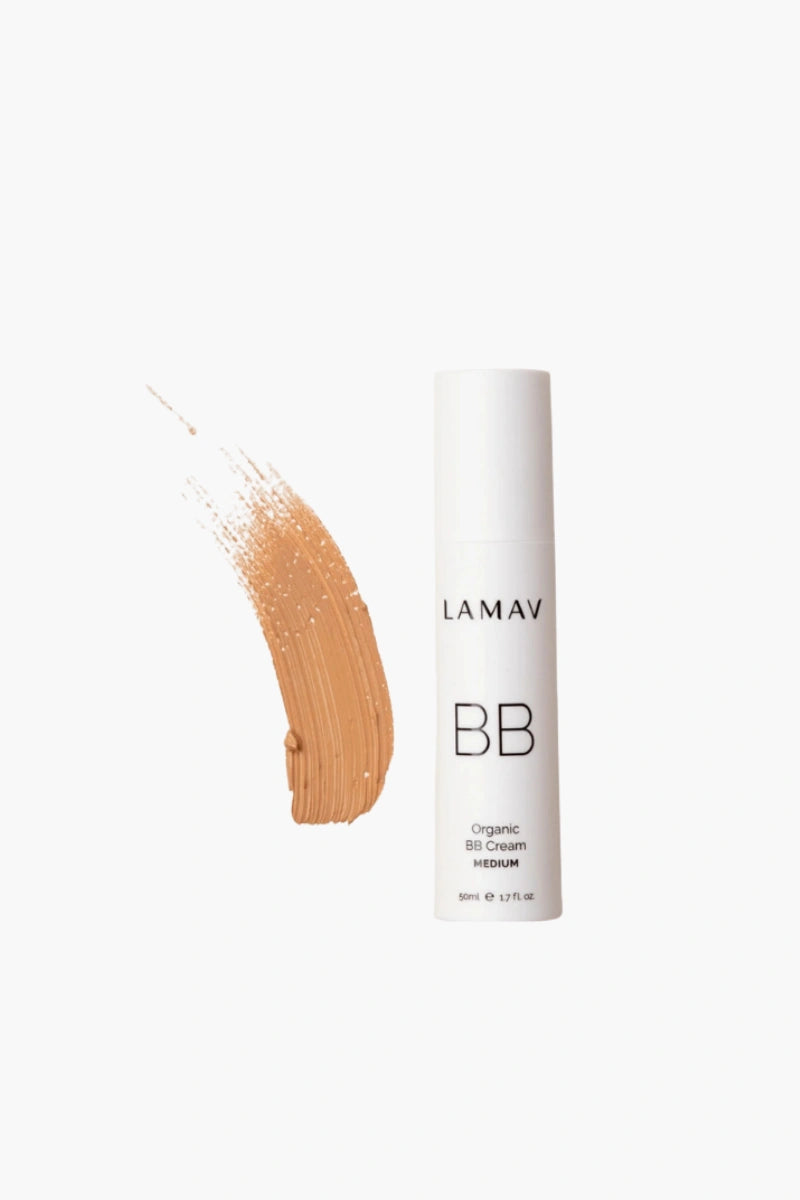
LAMAV Organic BB Cream 50ml
The most-reviewed product we stock, by a distance. Who it suits: anyone who wants their skin to look like skin — light, everyday coverage rather than a full base. Why it helps: it adapts to your tone, so skin looks evened out and naturally luminous rather than covered over. How to use it: after moisturiser and sunscreen, blend a small amount over the face with fingers or a damp sponge, building only where you want it.
Shop nowDoes Clean Makeup Actually Perform?
Yes — and where it sometimes does not, the reason has nothing to do with being clean.
Coverage, wear time and blendability come from formulation skill: pigment load, the vehicle carrying it, film-formers, particle size, and how the product behaves over whatever is underneath it. None of that is the exclusive property of conventional makeup. A clean brand with a good formulator makes good makeup. A clean brand without one does not.
Where clean makeup has historically had a harder time is in a few specific places: very high coverage, very long wear in heat and humidity, and shade range. Those gaps are narrowing, but it is more honest to name them than to pretend the category is uniformly excellent. It is not. Nor is conventional makeup.
EDITOR’S CHOICE · BEST MINERAL POWDER BASE
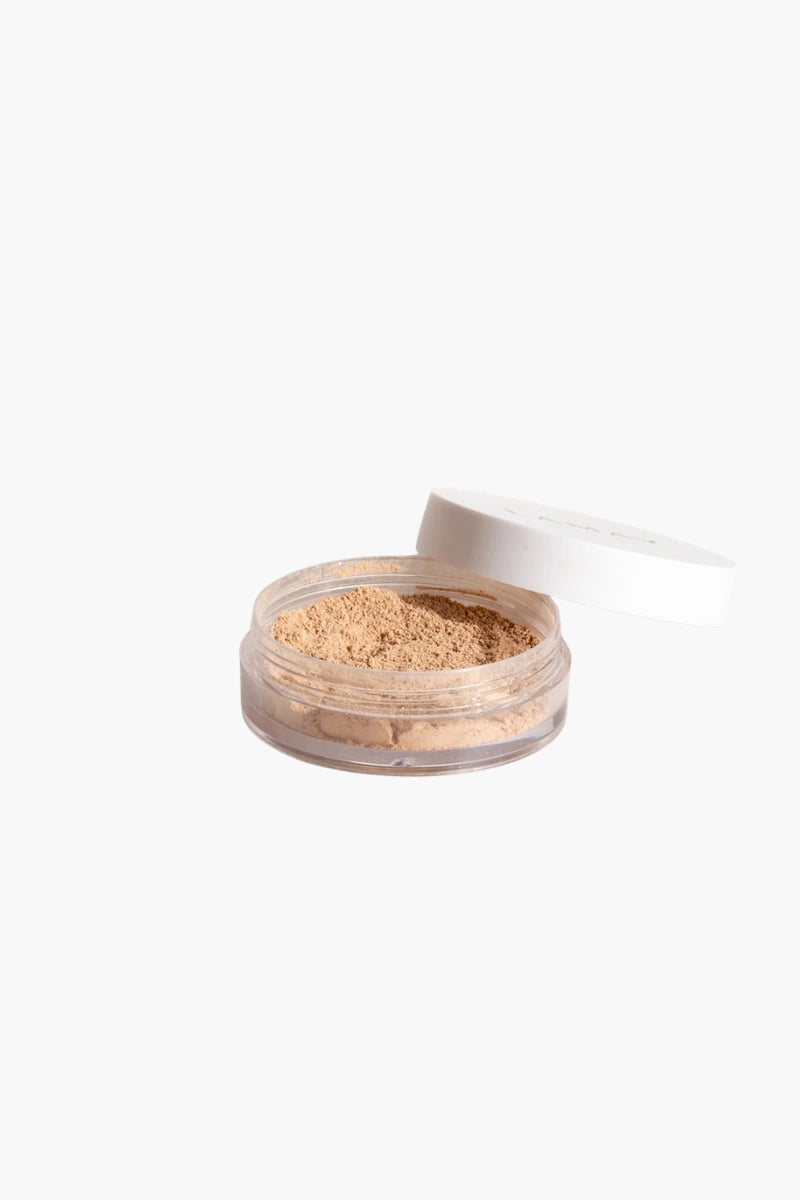
LAMAV Anti-Ageing Mineral Foundation SPF15 8g
A loose mineral powder that buffs on and builds. Who it suits: anyone who prefers a soft-focus powder finish, and anyone who wants to buff a little extra coverage over a liquid base. Why it helps: it sits lightly, and leaves skin looking smooth and even rather than powdery. How to use it: tap a little into the lid, load a kabuki brush, tap off the excess and buff in small circles. This product carries SPF15 — treat that as a bonus, not as your sun protection.
Shop nowWhat About Makeup with SPF?
This is the section that matters most, and it is the one the beauty industry is quietest about.
Makeup with SPF is a bonus layer. It is not your sunscreen. Cancer Council’s position is unambiguous: if you are outdoors for a long period, swimming or sweating, use a proper sunscreen rather than relying on cosmetics with SPF. Most cosmetics offer no protection in water, and like any SPF product they need reapplying.
There are two reasons the maths does not work in makeup’s favour.
You do not apply enough of it. An SPF rating is measured at a specific application thickness — roughly a teaspoon for the face and neck. Nobody applies a teaspoon of foundation. The protection you get in practice is a fraction of the number on the box.
SPF does not stack. This one surprises almost everyone. An SPF20 moisturiser under an SPF15 foundation does not give you SPF35. Cancer Council NSW puts it plainly: you are protected to the level of the highest single product, not the sum of them.
THE VAMS POSITION ON SPF IN MAKEUP
Wear sunscreen first, on clean dry skin, and let it settle. Then wear whatever makeup you like on top. If that makeup happens to carry an SPF, treat it as a happy extra — a little more cover on a day you were going to wear makeup anyway. We would rather tell you that than sell you a foundation as sun protection.
If sun protection is the priority, start with our complete guide to mineral sunblock in Australia, or go straight to the mineral sunscreen collection.
How Do I Build a Simple Clean Makeup Routine?
Four steps, in order, and you may stop at any point. There is no prize for using more products.
- Prime, if you want to. Entirely optional. Helps a base sit evenly on skin that feels dry or looks textured.
- Base. BB cream, skin tint or foundation. Start sheer and build only where you need it.
- Colour. A blush or a bronzer does more for a face than a heavier base ever will.
- A good brush. The least glamorous item on this list, and the one that changes the result most.
EDITOR’S CHOICE · BEST ONE-PRODUCT UPGRADE
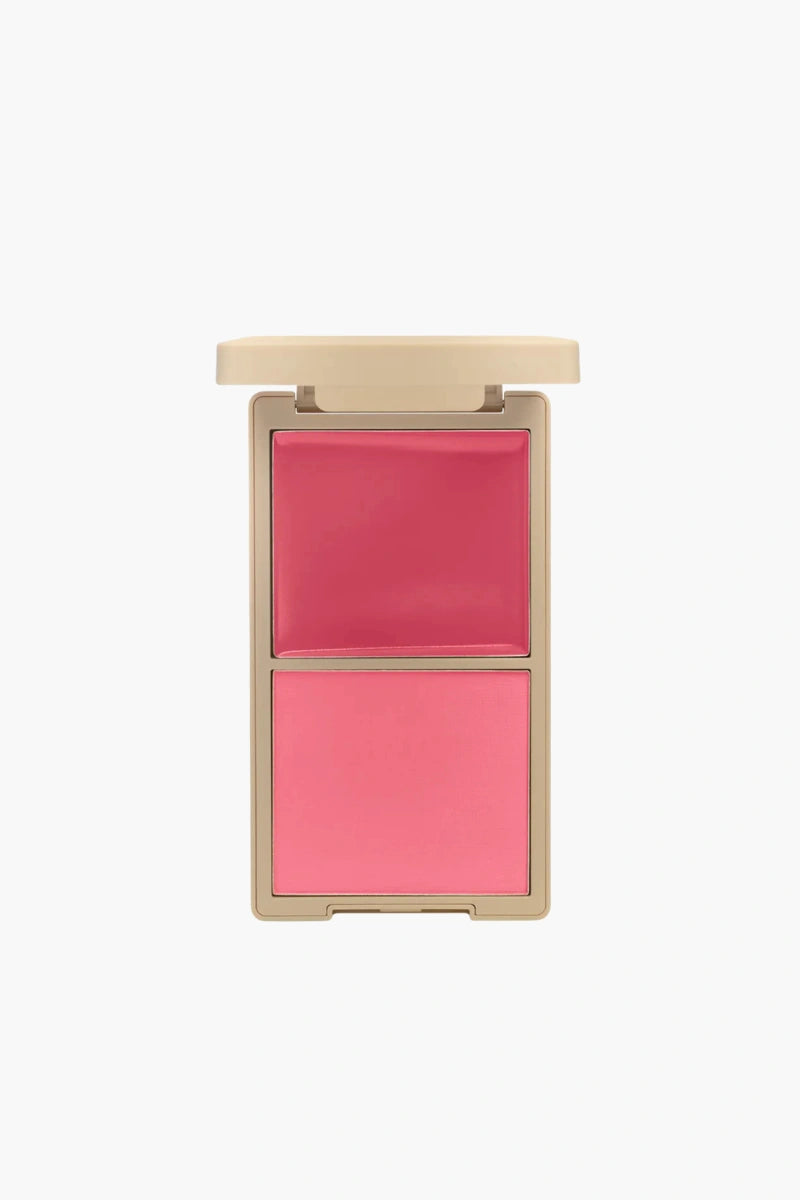
VANI-T Make Me Blush Cream & Powder Duo
Cream and powder in one compact, which is a quietly clever bit of design. Who it suits: anyone whose routine is base-and-run, and anyone who cannot decide between finishes. Why it helps: the cream melts into skin for a lit-from-within flush, and the powder over the top sets it and deepens it. How to use it: cream first, with a fingertip, on the apples of the cheeks. Powder on top only if you want more.
Shop nowSHOP THE CLEAN MAKEUP ROUTINE
Four steps, in order.


Browse the full range in our makeup collection, or see everything in the clean beauty edit.
Myth vs Fact
Myth: Clean makeup means natural ingredients only.
Fact: Clean formulas routinely include synthetic and nature-identical ingredients, often chosen precisely because they are stable and predictable.
Myth: Clean makeup cannot give you real coverage.
Fact: Coverage is a formulation decision. Buildable and full-coverage clean formulas exist.
Myth: Mineral makeup and clean makeup are the same thing.
Fact: Mineral describes the pigment. Clean describes the whole formula. A product can be one without the other.
Myth: An SPF20 moisturiser plus an SPF15 foundation gives you SPF35.
Fact: SPF does not stack. You are protected to the level of the highest single product — here, SPF20.
Myth: Makeup with SPF is enough sun protection for an Australian summer.
Fact: It is not. Cancer Council recommends a proper sunscreen rather than cosmetics with SPF when you are outdoors for a long period, swimming or sweating.
Frequently Asked Questions
What is clean beauty makeup?
Clean beauty makeup is makeup formulated to a brand or retailer’s chosen ingredient standard, usually with a published exclusion list and a full ingredient list for every product. There is no official Australian definition of the term.
Is clean makeup the same as mineral makeup?
No. Mineral makeup describes the pigment — mineral-derived colourants such as iron oxides and titanium dioxide. Clean makeup describes the whole formula against a brand’s standard. A product can be one without being the other.
Is clean makeup better for your skin?
Not automatically. Suitability depends on the finished formula and on your own skin. A clean product can still contain something you react to, and a conventional product can suit you perfectly well.
Does clean makeup contain chemicals?
Yes, because everything does — including water and plant extracts. What differs is which chemicals a brand chooses to use, and how openly it tells you about them.
Can clean makeup give full coverage?
Yes. Coverage comes from how a product is formulated, not from whether it meets a clean standard. Buildable and full-coverage clean formulas are widely available.
Is the SPF in my foundation enough sun protection?
No. Cancer Council recommends using a proper sunscreen rather than relying on cosmetics with SPF, particularly when you are outdoors for a long period, swimming or sweating. Most cosmetics offer no protection in water and, like any SPF product, need reapplying.
Do SPF products layer together to give a higher SPF?
No. An SPF20 moisturiser under an SPF15 foundation does not give you SPF35. You are protected only to the level of the highest single product.
Should I put sunscreen on before or after makeup?
Before. Apply sunscreen to clean, dry skin and let it settle, then apply makeup over the top.
Is clean makeup better for sensitive skin?
It can be, when the product is fragrance-free, simply formulated and clearly labelled. But the clean label itself is not a guarantee — essential oils and botanical extracts appear in plenty of clean formulas and are among the more common irritants.
Is clean makeup vegan and cruelty-free?
Not necessarily. These are three separate claims. Clean refers to formulation standards, vegan to animal-derived ingredients, and cruelty-free to animal-testing policy. Check each one on its own.
Is clean makeup more expensive?
Sometimes, but not reliably. Price reflects manufacturing scale, sourcing, packaging, testing and brand positioning. A higher price does not prove a better formula.
Where can I buy clean makeup in Australia?
You can shop clean makeup from Australian brand websites and curated retailers such as VAMS Beauty. Check each retailer’s criteria and each product’s full ingredient list before you buy.
Related Reading
- What Is Clean Beauty? The Complete Australian Guide — the full picture, including how cosmetics are actually regulated here.
- Mineral Organic Foundation, Explained — if you want to go deeper on the mineral side specifically.
- The Complete Guide to Mineral Sunblock in Australia — what to wear under your makeup, and why.
- 3 Mineral Sunscreens for Daily Use (No White Cast) — for anyone who has given up on zinc under makeup.
- Best Reef Safe Sunscreen Australia Guide — another unregulated term, read carefully.
Or shop: makeup, mineral makeup, makeup brushes, clean beauty and mineral sunscreen, or meet every label we stock on our brands page.
Research and References
- Cancer Council Australia: Sunscreen fact sheet
- Cancer Council NSW: Your no-nonsense guide to sunscreen
- Therapeutic Goods Administration: Determining if a product is a cosmetic or therapeutic good
- Australian Industrial Chemicals Introduction Scheme: Cosmetics and soap
- Product Safety Australia: Cosmetic ingredients labelling guide
This article provides general consumer information and does not replace medical advice. Product formulations and claims can change, so check current product labels and official Australian guidance. For sun protection, follow current Cancer Council recommendations.
WANT $100 WORTH OF AUSTRALIAN SKINCARE AND BEAUTY PRODUCTS?
Subscribe anywhere on the website for your chance to win.
ABOUT THE AUTHOR
Written by Ellie Bunic, Founder of VAMS Beauty. She loves to yap about beauty, wellness and emerging Australian beauty brands. Every article in The VAMS Edit is created to help readers make more informed, confident beauty decisions through trusted research, practical advice and thoughtfully curated product recommendations.


Leave a comment