


How to Read a Perfume Ingredient Label: Phthalates, Parabens, 'Fragrance' and 'Non-Toxic' Explained

Last updated 3 October 2026 · 9 min read
Turn over a bottle of perfume and the ingredient list can be one word long, or twenty words you can't pronounce. Neither tells the whole story on its own. This guide explains how perfume labels work in Australia, what the common terms mean, what phthalates, parabens and fragrance allergens actually are, and the questions that get you real answers from a brand.
KEY TAKEAWAYS
- Ingredients are listed in descending order, so the base (oil, alcohol or water) usually comes first.
- In Australia, a brand can list its whole scent blend as one word: "fragrance" or "parfum".
- Phthalates and allergens in the blend won't show up separately, so ask the brand.
- Names like linalool and limonene are fragrance allergens. They occur naturally in essential oils too.
- "Non-toxic" has no agreed definition. A specific, written ingredient standard is more useful.
IN THIS GUIDE
- How do you read a perfume ingredient label?
- What does 'fragrance' or 'parfum' mean?
- Common perfume label terms, decoded
- Two real labels, side by side
- What are phthalates, and why do some perfumes leave them out?
- What are parabens, and are they in perfume?
- What are fragrance allergens?
- What does 'non-toxic' mean on perfume?
- What is an IFRA certificate?
- Questions to ask a perfume brand
- Perfume label FAQs
How do you read a perfume ingredient label?
Read from the top. Ingredients are listed in descending order, so the first one is the base: alcohol for a spray, oil for a roller, wax or butter for a balm. Next comes "fragrance" or "parfum", which covers the whole scent blend. Any names after that, like linalool or citronellol, are usually fragrance allergens the brand has chosen to list separately.
Australia's ingredient labelling rules sit in the Consumer Goods (Cosmetics) Information Standard 2020, enforced by the ACCC. Ingredients go in descending order by mass or volume. Brands may also list everything above 1% in descending order first, then everything below 1% in any order.
What does "fragrance" or "parfum" mean?
It means the scent blend: the mix of essential oils, natural extracts and synthetic aroma molecules that makes the perfume smell the way it does. A single blend can contain dozens of materials.
Under section 7(8) of the Information Standard, a brand can show its fragrance on the label as "fragrance", "fragrances", "parfum" or "parfums", or it can name every ingredient in the blend. Almost every brand uses the single word. It's legal and standard practice, and it protects the perfumer's formula.
It also means the label alone can't tell you what's inside the blend. That's where a brand's written standard comes in. Read more in What Is Clean Perfume?.
Common perfume label terms, decoded
| On the label | What it is | Where you'll see it |
|---|---|---|
| Alcohol denat. | Denatured alcohol, the usual base for sprays | Eau de parfum, eau de toilette, mists |
| Aqua | Water | Mists and lighter sprays |
| Parfum / Fragrance | The whole scent blend | Almost every perfume |
| Cocos nucifera oil | Coconut oil, a carrier oil | Perfume oils, balms |
| Simmondsia chinensis oil | Jojoba oil, a carrier oil | Perfume oils, balms |
| Cera alba | Beeswax, gives balms their shape | Solid perfume |
| Butyrospermum parkii butter | Shea butter | Solid perfume |
| Tocopherol | Vitamin E, often added to help oils stay fresh | Oils, balms |
| Linalool, limonene, citronellol, geraniol, coumarin | Fragrance molecules that are known allergens for some people, listed separately | Perfumes also sold in Europe |
Some brands use the botanical (INCI) name, like Cocos nucifera. Others use the everyday name, like coconut oil. Both are fine.
Two real labels, side by side
| Fleurac Forest Fig Perfume Oil | By Yuliya Twenty Four Seven Perfume Mist | |
|---|---|---|
| Label | Coconut oil, fragrance | Alcohol denat. (ethanol), parfum, aqua, PPG-20 methyl glucose ether, butylated hydroxytoluene, alpha-isomethyl ionone, cinnamyl alcohol, limonene, cinnamal |
| Base | Coconut oil | Denatured alcohol, with a little water |
| Format | 15ml roller | Spray mist |
| What it tells you | An oil perfume with no alcohol or water. The scent blend is listed as one word. | An alcohol spray. Butylated hydroxytoluene is an antioxidant. The last four names are fragrance allergens from the blend, listed separately. |
Neither label is better or worse. They describe two different formats, and one names its allergens while the other uses the single word. The oil sits close to the skin. The mist is lighter and fills the air around you. Compare them in Roll On Perfume Oil vs Spray Perfume.
What are phthalates, and why do some perfumes leave them out?
Phthalates are a family of chemicals used in many products. In perfume, the one you're most likely to hear about is diethyl phthalate (DEP), used as a solvent and fixative for fragrance materials. It sits inside the fragrance blend, so it won't appear separately on an Australian label.
Regulators treat phthalates differently. Some have been restricted in cosmetics in Australia and overseas. DEP has been assessed by the EU's scientific committee, which concluded its safety profile supports use in cosmetics at the levels used.
So why do some brands leave phthalates out? It's a formulation choice, often part of a wider "clean" standard. Fleurac, for example, says its fragrances are made without phthalates. If phthalate-free matters to you, look for a brand that states it in writing, and treat it as a preference rather than a safety guarantee.
What are parabens, and are they in perfume?
Parabens, such as methylparaben and propylparaben, are preservatives. They stop bacteria and mould growing in products that contain water. Most perfumes are made mainly of alcohol or oil, so many never contained parabens in the first place.
A "paraben-free" claim is accurate if parabens aren't in the formula. It's just worth knowing that for a perfume oil or a solid balm, the bar is low. Ask what else the brand leaves out.
What are fragrance allergens?
Fragrance allergens are specific scent molecules that can cause skin reactions in some people. Many occur naturally: linalool is in lavender, limonene in citrus peel, geraniol in rose and geranium.
| Australia | European Union | |
|---|---|---|
| Must allergens be named? | No. The blend can be listed as "fragrance" or "parfum" | Yes, above set levels (0.001% in leave-on products like perfume) |
| How many are listed? | None required | The list is growing from about two dozen to more than 80 substances, with new products required to comply from 31 July 2026 |
That's why some perfumes sold in Australia list allergens and others don't. A perfume that names them isn't more allergenic. It's more transparent. If your skin is sensitive, patch test any new scent: apply a little to your inner arm and wait 24 hours.
What does "non-toxic" mean on perfume?
Nothing specific. There is no agreed definition of "non-toxic" for cosmetics in Australia. Under the Australian Consumer Law, a brand can't make misleading claims, so one using the word should be able to back it up. In practice, "non-toxic" is a blanket term that doesn't tell you what's in the bottle.
A specific statement is more useful, such as "made without phthalates, parabens or alcohol", along with a full ingredient list and confirmation that the fragrance oil meets the IFRA Standards.
What is an IFRA certificate?
The International Fragrance Association (IFRA) sets standards that prohibit, restrict or set purity requirements for fragrance materials, based on safety assessments by the Research Institute for Fragrance Materials. An IFRA certificate is a document from the fragrance oil supplier that confirms a specific blend complies with those standards.
The certificate lists the maximum amount of the blend that can be used in each product category. Category 4 covers fine fragrance of all types, including eau de parfum, eau de toilette, cologne and solid perfume. As the certificates themselves note, an IFRA certificate doesn't replace a full safety assessment of the finished product.
Questions to ask a perfume brand
FIVE QUESTIONS THAT GET REAL ANSWERS
- What do you leave out? Look for a specific list, not a blanket "non-toxic".
- Is your fragrance oil phthalate-free? It's the only way to know, because the blend is listed as one word.
- Does your fragrance meet the IFRA Standards? A good brand can confirm this from its supplier's certificate.
- Which allergens are in the blend? Helpful if you know you react to a specific one.
- Where is it made? A simple question that tells you how well a brand knows its own supply chain.
Perfumes with short, readable labels
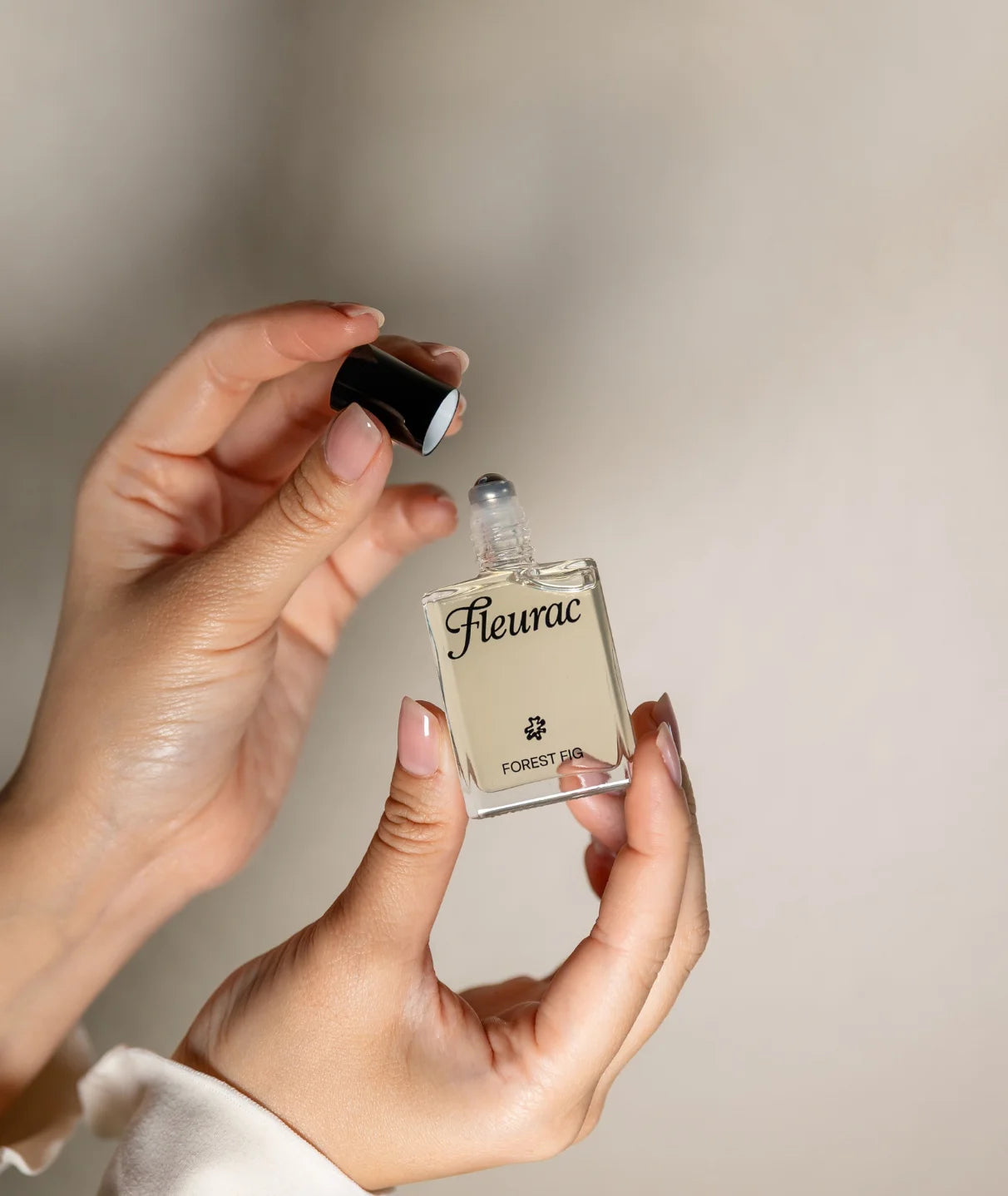

Want to try before you commit? The Fleurac Fragrance Discovery Set ($28) has both Fleurac scents in 2ml rollers.
Perfume label FAQs
Does 'fragrance' on a label hide ingredients?
It groups them. Under Australia's Consumer Goods (Cosmetics) Information Standard 2020, a brand can list its whole scent blend as 'fragrance' or 'parfum' instead of naming each component. That's legal and standard practice. To learn more, ask the brand what it leaves out and whether its fragrance oil meets the IFRA Standards.
Are there phthalates in perfume?
Some perfumes contain diethyl phthalate (DEP), which is used as a solvent and fixative in fragrance. Because it sits inside the fragrance blend, it won't appear separately on an Australian label. The only way to know is to ask the brand.
Is phthalate-free perfume safer?
Phthalate-free means the brand has chosen to leave phthalates out. The EU's scientific committee has assessed DEP as safe in cosmetics at the levels used, so treat phthalate-free as a formulation preference rather than a safety guarantee.
What are linalool and limonene on a perfume label?
They are fragrance molecules found naturally in many essential oils, such as lavender and citrus. They're named separately because they are known fragrance allergens for some people. EU rules require them to be listed above set levels. In Australia, listing them is voluntary.
Do Australian perfumes have to list allergens?
No. Australian ingredient labelling lets a brand list its fragrance as one word. Brands that also sell in Europe often list allergens anyway, because EU rules require it.
Is natural perfume free from allergens?
No. Many fragrance allergens, including linalool, limonene, citral and geraniol, occur naturally in essential oils. If your skin reacts to fragrance, patch test any new perfume, natural or not.
What does 'non-toxic' mean on perfume?
It has no agreed definition for cosmetics in Australia. Under the Australian Consumer Law, a brand making that claim must not mislead. A specific list of what a brand leaves out, plus a full ingredient list, tells you more.
Shop clean perfume


Explore more: Fleurac clean perfume · Gracious Minds organic perfumes · Australian Fragrance
Read more on The VAMS Edit: What Is Clean Perfume? · What Is Solid Perfume? · Extrait de Parfum vs EDP vs EDT
JOIN THE VAMS COMMUNITY
New arrivals, giveaways and honest guides from Australia's clean beauty edit – straight to your inbox.
Subscribe


