


Organic Skincare Ingredients: What They Are and What They Do

Last updated 23 July 2026 · 10 min read
Organic skincare ingredients are far less mysterious than the back of a bottle makes them look. Behind the Latin names and the long words sit a fairly small number of things doing a fairly small number of jobs: holding water in the skin, softening it, protecting the formula, adding scent, or giving it colour and texture.
The useful skill is not memorising a list of "nasty" ingredients It is understanding what each ingredient is actually there to do, so you can look at any label — organic or not — and work out whether that product makes sense for you.
This guide explains the ingredients you will genuinely encounter in organic skincare, how to read an ingredients list without panicking, why preservatives matter, and what organic standards typically leave out and why. No fear-mongering, no good-versus-bad lists.
KEY TAKEAWAYS
- Organic refers to how an ingredient was farmed — not to what it does on your skin, and not to whether it will suit you.
- Ingredients are listed in descending order by quantity, so the first five tell you most of the story.
- A long or unfamiliar name is not evidence of anything. Ingredient names are standardised so they can be identified across every market.
- Water-based organic products still need preservatives. That is a sign of a well-made formula, not a compromised one.
- Botanical does not mean gentle. Essential oils and fragrant plant extracts are among the more common causes of irritation.
- The right ingredients are the ones that suit your skin. There is no universal best list.
QUICK ANSWER
Organic skincare ingredients are ingredients grown to an organic farming standard — typically plant oils, butters, botanical extracts, waxes and plant-derived actives. The word organic describes how an ingredient was produced, not how it performs. Most organic formulas also contain water, emulsifiers and preservatives, which are necessary for a product to be stable, safe and pleasant to use.
In this article
- What are organic skincare ingredients?
- How do I read an organic ingredients list?
- Which ingredients hold water in the skin?
- Which plant oils and butters are worth knowing?
- What do antioxidants actually do?
- Which botanical extracts turn up most often?
- Why do organic products contain preservatives?
- What do organic standards usually exclude, and why?
- How do I choose ingredients for my own skin?
- Myth vs fact
- Frequently asked questions
- Related reading
- Research and references
What Are Organic Skincare Ingredients?
Organic skincare ingredients are ingredients grown according to an organic farming standard — broadly, without synthetic pesticides or fertilisers, and to rules an independent certifier can verify.
That is the entire meaning of the word. It describes the farming, not the function. An organically grown rosehip oil and a conventionally grown rosehip oil do the same job on your skin. What differs is how the plant was cultivated, and what documentation sits behind it.
This matters because organic is often read as a shorthand for gentle, safe or effective, and it is none of those things. It is a supply-chain claim. A very good one, if you care about farming practices — but it tells you nothing about whether a product will suit your face. If you want the detail on how those claims are verified, our guide to certified organic skincare from Australian brands covers exactly that.
Organic tells you how an ingredient was grown. The ingredients list tells you what it will do.
How Do I Read an Organic Ingredients List?
Four things, and you can do all of them standing in front of a shelf.
- Read the first five. Ingredients are listed in descending order by quantity, so the top of the list is most of the product. Everything after that is present in smaller amounts, and below about 1% the order stops being meaningful.
- Find the water. If aqua is first, you have a water-based product — which means it needs a preservation system. That is a good thing.
- Spot your own triggers. Not a universal danger list. Yours. If fragrance or a particular oil has never agreed with you, that is the thing to look for.
- Ignore the length. A short list is not automatically better. Some very short lists are simply under-formulated.
You will also notice that botanical ingredients appear under their Latin names — Rosa canina rather than rosehip, Butyrospermum parkii rather than shea butter. This is standardised naming so an ingredient can be identified consistently anywhere in the world. It makes a list look more technical than it is.
A BETTER QUESTION TO ASK
Instead of “is this ingredient organic?”, ask “what is this ingredient here to do, and is this whole product right for my skin?” The second question is the one that actually helps you shop.
Which Ingredients Hold Water in the Skin?
These are humectants — ingredients that attract and hold water. They are the backbone of anything described as hydrating, and they show up constantly in organic formulas.
- Glycerin — the quiet workhorse of skincare. It draws water into the upper layers of the skin and is well tolerated by most people. Unglamorous, and in almost everything, for good reason.
- Hyaluronic acid — holds a considerable amount of water relative to its weight. Different molecular sizes sit at different depths in the upper skin layers, which is why you sometimes see several listed together.
- Aloe vera — largely water, with a long history in formulas designed to feel cooling and comfortable.
- Honey and floral waters — traditional humectants that also carry scent and a little texture.
A note worth knowing: humectants pull water from wherever they can find it. In very dry air, that can include your own skin. Which is why they work best applied to damp skin and sealed with something on top — an oil, a butter or a moisturiser.
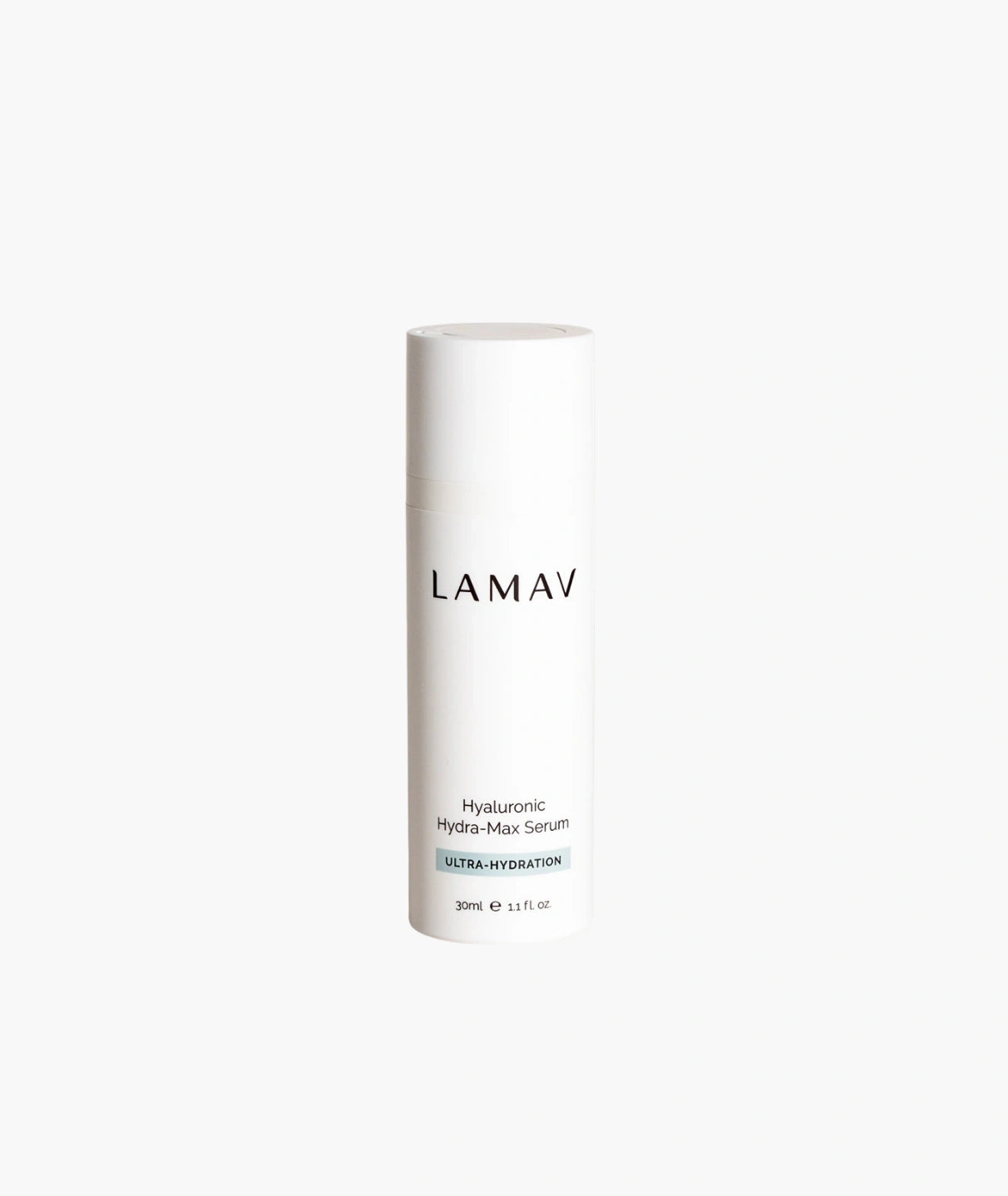
INGREDIENT IN ACTION · HYALURONIC ACID
LAMAV Hyaluronic Hydra-Max Serum
A worked example of a humectant serum. Who it suits: skin that feels tight, thirsty or dull by mid-afternoon. Why it helps: skin feels plumper and more comfortable, and looks fresher. How to use it: press into damp skin after cleansing, then follow with an oil or moisturiser to seal it in — that last step is the one people skip.
Shop nowWhich Plant Oils and Butters Are Worth Knowing?
These are emollients and occlusives — they soften skin and slow water loss from the surface. Organic skincare leans on them heavily, and they are where most of the sensory pleasure of a product lives.
| Ingredient | What it is there for |
|---|---|
| Jojoba | Technically a liquid wax. Light, stable and closer in structure to skin’s own oils than most, which is why it sinks in quickly. |
| Rosehip | Rich in unsaturated fatty acids. Dries down relatively quickly and leaves skin looking soft and luminous. |
| Marula | Lightweight, high in oleic acid, and notably stable — it does not turn quickly. |
| Shea butter | Solid at room temperature, melts on contact. Cushioning and rich — the reason body creams feel like body creams. |
| Squalane | Usually plant-derived now, most often from olives or sugarcane. Very light, very stable, and suits most people. |
| Omega-rich blends | Combinations of plant oils chosen for their fatty acid profile. Skin feels nourished and comforted. |
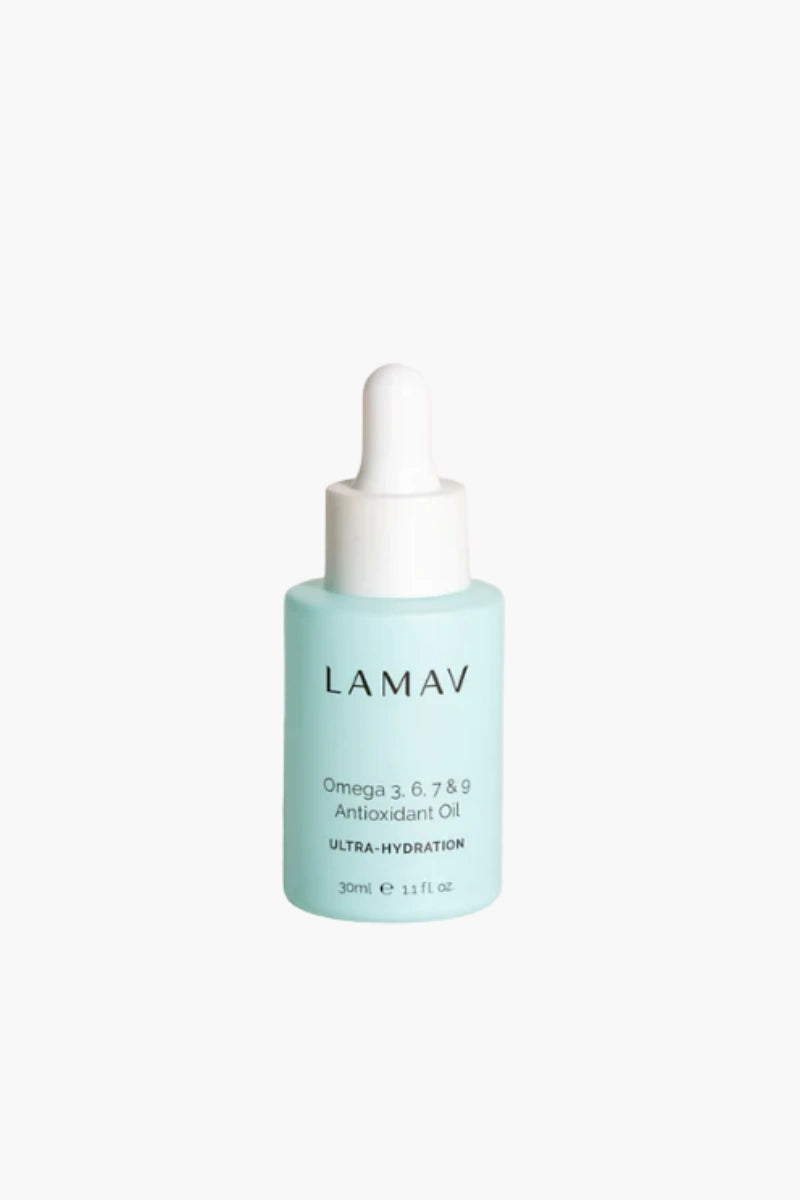
INGREDIENT IN ACTION · PLANT OIL BLEND
LAMAV Omega 3, 6, 7 & 9 Antioxidant Oil 30ml
A good illustration of a fatty-acid blend rather than a single oil. Who it suits: skin that feels dry, tight or looks dull by evening. Why it helps: skin feels nourished and comforted, and looks softer. How to use it: two or three drops pressed into damp skin at night, after your serum.
Shop nowWhat Do Antioxidants Actually Do?
Antioxidants are ingredients that neutralise free radicals — unstable molecules generated by ordinary things like UV exposure and pollution. In a skincare formula they do two jobs: they help protect the oils in the product itself from going rancid, and they are studied for their effects on skin.
The important distinction, and it is the one most marketing blurs: the research belongs to the ingredient, not to the bottle. Vitamin C has been studied extensively. That does not mean any given vitamin C product has been. Concentration, form, pH, packaging and stability all determine whether an ingredient does anything useful in a finished formula.
- Vitamin C — appears in many forms, some far more stable than others. Well studied in relation to how even and radiant skin looks. Usually packaged in opaque or dark glass, because light and air degrade it.
- Vitamin E — often listed as tocopherol. Does double duty: it is studied on skin, and it helps keep plant oils in a formula from oxidising.
- Green tea and polyphenols — plant compounds widely researched for their antioxidant activity.
- Niacinamide — a form of vitamin B3, well studied for supporting the look of even skin tone and a comfortable skin barrier.
- Bakuchiol — a plant-derived compound often chosen by people who find retinol too much for their skin. It is not vitamin A and does not behave identically to it.
HOW TO READ AN INGREDIENT CLAIM
“Vitamin C is well studied for how even skin looks” is a statement about an ingredient. “This serum is proven to fade dark spots” is a claim about a product — and it needs evidence for that specific product. If a brand cannot produce it, treat the sentence as marketing.
Which Botanical Extracts Turn Up Most Often?
Botanical extracts are where organic skincare gets its personality — and where the honest conversation about irritation has to happen.
- Chamomile and calendula — long-standing favourites in formulas designed to feel soothing and gentle.
- Centella asiatica — widely used in products intended to leave skin feeling calm and comfortable.
- Colloidal oatmeal — finely milled oat, common in formulas for skin that feels easily upset.
- Rose and floral waters — carry scent, a little hydration and a great deal of ritual.
- Australian natives — Kakadu plum, quandong, davidson plum and finger lime appear increasingly in Australian-made formulas. Kakadu plum in particular is noted for its vitamin C content.
- Essential oils — plant-derived and aromatic, and the ones to watch. Several contain recognised fragrance allergens. Lovely for many people, genuinely problematic for others.
Worth saying plainly: botanical is not a synonym for gentle. Plants produce their compounds to defend themselves, not to please human skin. Most are perfectly fine. A few are among the most common causes of contact reactions in cosmetics. If your skin is reactive, a shorter botanical list is usually the easier place to start.
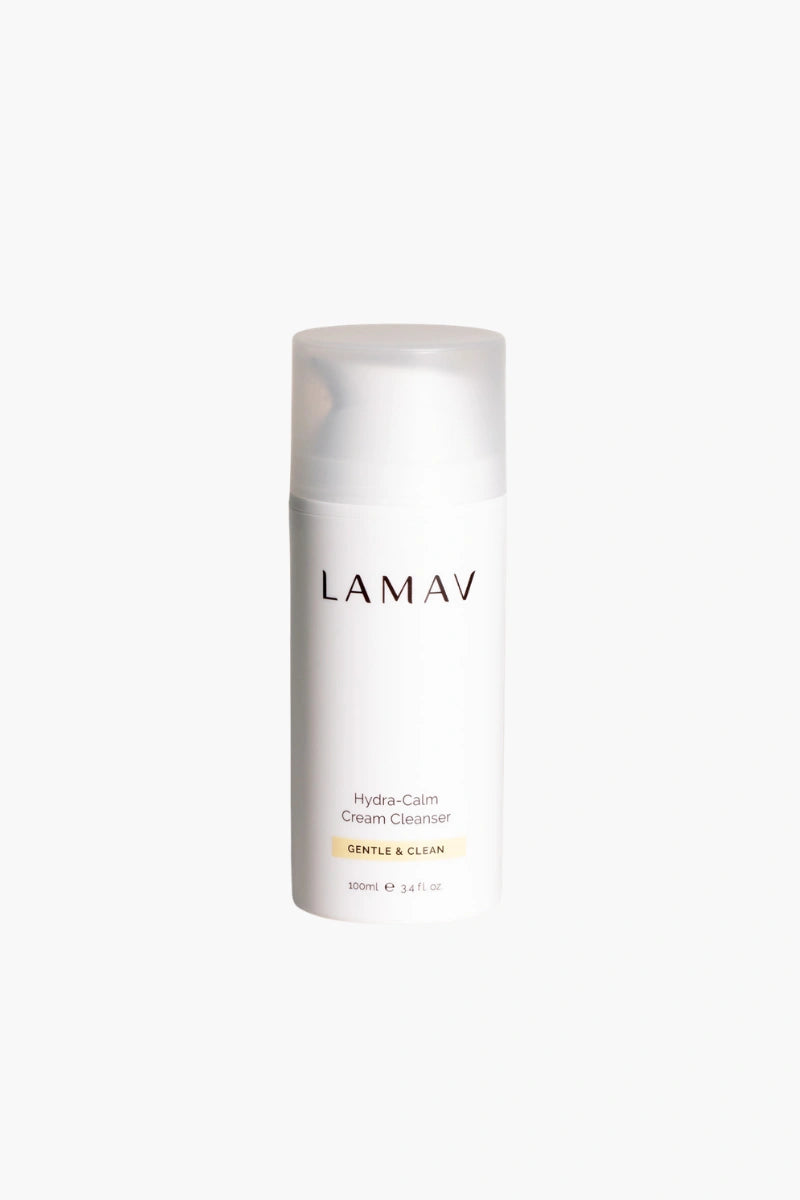
INGREDIENT IN ACTION · GENTLE SURFACTANTS
LAMAV Hydra-Calm Cream Cleanser 100ml
Cream cleansers use milder cleansing agents than foaming ones, which is the whole point of the format. Who it suits: anyone whose skin feels tight or squeaky after washing. Why it helps: it lifts the day off without stripping, so skin feels calm and comfortable. How to use it: massage into damp skin, then rinse or remove with a warm cloth.
Shop nowWhy Do Organic Products Contain Preservatives?
Because anything containing water can grow bacteria, yeast and mould — and a face cream is a warm, damp, nutrient-rich place that you put your fingers into daily.
A preservative system keeps a product safe and stable across its shelf life and the months you are using it. Organic standards permit a specific set of preservatives, and formulators choose from that list. Common ones you will see include benzyl alcohol, sodium benzoate, potassium sorbate and various plant-derived acids.
“Preservative-free” is genuinely appropriate for some products — a pure oil or a balm with no water in it does not need the same protection. But on a water-based product, preservative-free is not a feature. An effective, properly tested preservation system is a mark of a formula made by someone who knows what they are doing.
A USEFUL RULE OF THUMB
If water is high on the ingredients list and there is no visible preservative, ask why. Either the product uses an unusual system worth understanding, or it is relying on you to finish it very quickly.
What Do Organic Standards Usually Exclude, and Why?
Organic standards work by exclusion as much as inclusion. Some of those exclusions are about farming and processing. Others reflect a certifier’s own philosophy about what belongs in a natural product. Very few are about acute safety.
- Parabens — effective, well-studied preservatives that most organic standards exclude. They are permitted in cosmetics in Australia within regulated limits. Different parabens have different data behind them, so treating the whole group as one thing oversimplifies it. Organic standards exclude them primarily because they are synthetic, not because ordinary cosmetic use has been shown to be unsafe.
- Synthetic fragrance — usually excluded in favour of essential oils or naturally derived aromatics. Worth knowing that natural fragrance can irritate just as readily.
- Silicones — excluded by most standards, generally on environmental and philosophical grounds rather than skin-safety ones.
- Mineral oil and petrolatum — excluded because they are petroleum-derived. Highly refined cosmetic grades have a long record of safe use; the objection is about the source.
- Synthetic colours — excluded in favour of mineral or plant-derived pigments.
- PEGs and ethoxylated ingredients — excluded largely because of the processing method used to make them.
The pattern is worth noticing. Most exclusions answer the question “is this consistent with organic principles?”, not “is this dangerous?” Those are different questions, and conflating them is how ingredient fear gets manufactured. A brand that explains why it excludes something is being useful. A brand that just implies danger is selling you anxiety.
How Do I Choose Ingredients for My Own Skin?
Start with what your skin actually does, not with an ingredient list you found online.
- Name the thing you want to change. Tightness after cleansing. Dullness by 3pm. Oiliness through the T-zone. Start there.
- Match the category, not the buzzword. Tight skin usually wants humectants and a gentler cleanser. Dry skin wants oils and butters. Dullness often just wants consistent hydration and sun protection.
- Introduce one product at a time. Three new things at once means you will never know which one helped, or which one did not.
- Patch test if your skin is reactive. Apply a small amount to a limited area, follow the directions, and watch it before going near your whole face.
- Give it time. Hydration you can feel immediately. Most other changes take weeks of consistent use, if they come at all.
And if a product stings, burns, swells or leaves skin persistently irritated, stop using it. Seek professional medical advice for a severe or ongoing reaction — that is a doctor’s question, not a skincare one.
SHOP THE INGREDIENTS
Four Australian-made places to start


Browse more in the LAMAV collection, the facial oils edit, or the full Australian skincare range.
Myth vs Fact
Myth: If you cannot pronounce it, it does not belong on your skin.
Fact: Ingredient names are standardised so they can be identified worldwide. Butyrospermum parkii is shea butter. Tocopherol is vitamin E.
Myth: Organic ingredients are gentler on skin.
Fact: Organic describes farming, not skin compatibility. Essential oils are organic and are among the more common irritants.
Myth: A shorter ingredients list is always better.
Fact: Length tells you very little. Some short formulas are elegant. Others are simply missing things they needed.
Myth: Preservative-free means purer.
Fact: In a water-based product it usually means less protected. Preservation is a quality marker, not a compromise.
Myth: If an ingredient is well studied, the product containing it is proven.
Fact: Evidence belongs to the ingredient at a given concentration and form. A finished product needs its own evidence.
Frequently Asked Questions
What are organic skincare ingredients?
Organic skincare ingredients are ingredients grown to an organic farming standard, typically plant oils, butters, botanical extracts, waxes and plant-derived actives. The term describes how the ingredient was produced, not how it performs on skin.
Which organic skincare ingredients should I look for?
Start with the job you want done rather than a list. Humectants such as glycerin and hyaluronic acid hold water in the skin. Plant oils and butters soften and slow water loss. Antioxidants such as vitamin C and vitamin E are well studied and also help protect the formula itself.
Are organic ingredients better for your skin?
Not automatically. Organic refers to farming practices, not to skin compatibility or performance. The finished formula, the concentration and your own skin matter considerably more than whether an ingredient was organically grown.
Do organic skincare products contain chemicals?
Yes, because everything is made of chemicals, including water and plant extracts. Organic standards restrict which ones may be used and how they are produced, but no cosmetic is chemical-free.
Why do organic products still contain preservatives?
Any product containing water can grow bacteria, yeast and mould. Preservatives keep a formula safe and stable across its shelf life. Organic standards permit a specific set of preservatives, and using one is a sign of a well-made product.
Are parabens harmful in skincare?
Parabens are effective preservatives permitted in cosmetics in Australia within regulated limits. Most organic standards exclude them because they are synthetic rather than because ordinary cosmetic use has been shown to be unsafe. Different parabens also have different data behind them.
Are essential oils safe in organic skincare?
They are plant-derived and widely used, but they are not automatically gentle. Several contain recognised fragrance allergens and are among the more common causes of irritation. If your skin is reactive, fragrance-free is a more useful filter than organic.
What is bakuchiol?
Bakuchiol is a plant-derived compound often chosen by people who find retinol too much for their skin. It is not vitamin A and does not behave identically to it.
How do I read an ingredients list?
Ingredients are listed in descending order by quantity, so the first five make up most of the product. Below roughly one per cent the order is no longer meaningful. Look for your own known triggers rather than a universal avoid list.
Does the order of ingredients matter?
Yes, at the top of the list. The first several ingredients tell you what the product mostly is. Further down, small differences in position stop being informative.
Are Australian native ingredients used in organic skincare?
Increasingly, yes. Kakadu plum, quandong, davidson plum and finger lime appear in many Australian-made formulas. Kakadu plum in particular is noted for its vitamin C content.
Can organic skincare ingredients cause a reaction?
Yes. Any cosmetic ingredient can potentially cause irritation or allergy, including organic and natural ones. Read the full ingredient list and patch test if you have sensitive or reactive skin.
Related Reading
- Are Organic Skincare Products Better for You? — the honest answer, and the pillar this guide sits under.
- Certified Organic Skin Care from Australian Brands — how to verify an organic claim in sixty seconds.
- Ingredient Spotlight: Azeclair — a single ingredient, properly explained.
- What Is Clean Beauty? The Complete Australian Guide — the same questions, applied to a different unregulated term.
- The LAMAV Certified Organic Range — one Australian brand, in depth.
Or shop: Australian skincare, facial oils, cleansers, LAMAV and clean beauty.
Research and References
- AICIS: Natural and organic ingredients
- AICIS: Cosmetics and soap
- Product Safety Australia: Cosmetic ingredients labelling guide
- ACCC: Organic claims
- Australasian College of Dermatologists: Information for the public
This article provides general consumer information and does not replace medical advice. Formulations and regulations can change, so check current product labels and official Australian guidance. If you experience a severe or persistent skin reaction, seek professional medical advice.
WANT $100 WORTH OF AUSTRALIAN SKINCARE AND BEAUTY PRODUCTS?
Subscribe anywhere on the website for your chance to win.
ABOUT THE AUTHOR
Written by Ellie Bunic, Founder of VAMS Beauty. She loves to yap about beauty, wellness and emerging Australian beauty brands. Every article in The VAMS Edit is created to help readers make more informed, confident beauty decisions through trusted research, practical advice and thoughtfully curated product recommendations.


Leave a comment